Autore: Davide Palumbo V B scienze applicate

  • Never judge a book from its cover….No, never jugde at all

    Never judge a book from its cover….No, never jugde at all

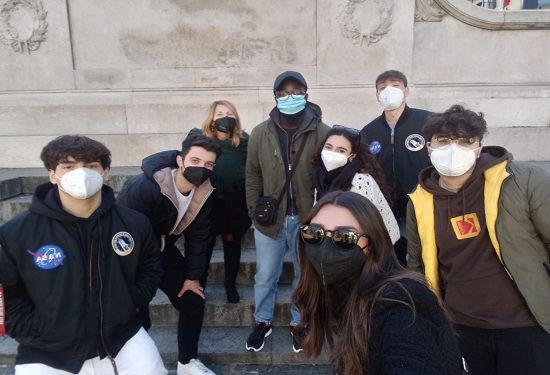
    Last 23rd January  my  classmates and I met a migrant who has been living  in Naples but working in torre Annunziata for long time. You have probably seen him many times walking down Piazza Ernesto Cesaro (Torre Annunziata). He stands there , outside the historical bakery “ Nunziatiello”. A kind, reserved and polite person who with gentleness shows his hand more to attract people’s attention than to beg for alms.

    He is F.(we won’t reveal his full name)  an immigrant from Nigeria who decided to emigrate from his native land and to come to Europe, as most of the immigrants/migrants, looking for better living conditions.  The meeting was arranged by our English teacher who had met him many years before and who like to talk with him who can speak English but can’t Italian very well in order to get more in touch with immigrants-related topics and to experience in first person what these people have to overcome in order to survive. The interview took place in Piazza Santa Teresa, Torre Annunziata. Our interviewee, was born in Nigeria and, unfortunately, his sight started to deteriorate when he was young: this poor health condition caused him incessant headaches that had to be resolved.One day he sold everything he owned and started his never-ending journey in search of a better life. F was able to afford a one-way leg to Libya and there he worked for one year in order to earn the money needed to pay for a “seat” on a human beings smuggler-owned boat directed to Italy.  He left Nigeria in early 2014 only to reach Europe in late 2015. He remarked that during the first leg of his trip from Agades, Nigeria, to Libya “the suffering was so mighty”. F says that a lot of people died and they encountered thousand of dead bodies along the road. He described us that they had no food and little water daily and still thanks God for having arrived to Libya alive. In Libya gangs in the districts enforce their own laws and then he added that, in Libya, neither authorities could be count on.


    The last leg of its trip, crossing the Mediterranean in winter (Libya and Sicily are almost 500km apart), was the most frightening. The interviewee remembers that they were “about 24” and went out at sea on Christmas Eve and the sea was really rough. Suddenly, the boat started to take on water and everybody started crying .He started praying God He was finally rescued by an NGO and he was told by a crew member that 4 boats were spotted leaving Libya that night but, unhappily, they were not able to find the others. Once he arrived to Italy, he was relocated in a refugee camp outside Naples. In Naples he did not know were to go and what to do in order to earn some money. After some time, he started looking for a job and he managed to earn something, under the table of course. F reported that, often, the payer would promise a payment of 50€ a day but, in the end, after the work was done, would give him only 20€. His sight problem grew worse every day. Anyway his opinion about immigrant is that My point being is that there is  a lack of policies and State interventions. Immigrants are left alone to survive, and, if they are lucky  they end up begging in order to eat at the end of the day. Disappointingly, these beggars are often judged and defined as “useless to society”, F told us to remark this aspect: “Before judging somebody, try to know (him/her), ask him a question: Why are you suffering?”. Probably, after the pandemic, our society lost its ability to be empathetic and we are only capable to look after our own garden, not realising that there a lot of people without a garden at all. Looking to what he overcame, and what others migrants had to go through, we should make a step back while being safe at our houses, surrounded by our loved ones, and we should comprehend at its fullest this statement: “Be the change you wish to see in the world”: this Gandhi’s quote has never been  so true!


    We should start with ourselves.

  • Articolo senza titolo 14599

    THE HUMAN RIGHTS DAY 

    Human Rights Day is observed every year on 10 December. This day was adopted by the United Nations General Assembly in 1948, the same day and year when a milestone document in the history of human rights was adopted: the Universal Declaration of Human Rights.

    This document is like a global road map for freedom and equality – protecting the rights of every individual, everywhere. Its adoption recognises human rights to be the foundation for freedom, justice and peace. It is the most translated document around the globe available in over 500 languages.

    Despite the efforts to protect human rights, the hostility toward human rights and those who defend them continues to rise. It is the case of Patrick George Zacky: a 29- year- old human rights activist who wrote about his experiences as a Coptic Christian in Egypt and then has gone on trial on the charge of spreading false news.

    Mr Zaki had been studying for a master’s degree in Gender and Women’s Studies at the University of Bologna when he decided to return to Egypt for a short family visit.

    He was arrested in February 2020 at Cairo airport upon his return from Italy, where he had been studying.

    His lawyers said he was condemned just for expressing his opinion. They also alleged that he was subjected to torture, including electric shocks while being questioned about his activism and the EIPR, which is one of Egypt’s leading human rights organisations. The Egyptian government has denied that security forces torture or mistreat detainees in Tora prison in Cairo.

    Detention without trial and the impossibility to defend himself is one of the most unjust violations of fundamental human rights after nearly two years he was released from prison. The court decision to release him is based on the fact that he has not yet been acquitted of the charges for which he has been held prisoner up to now. He is now on the loose, but still on trial, with the next hearing set for February 1st.


    The University of Bologna together with the Italian Government, associations and international movements have been fighting since day one, since that remote 7 February 2020, to see Patrick Zaki’s rights respected and to reaffirm our support for fundamental human rights, freedom of speech and teaching, and the incomparable value of critical thinking.


    The key values that lie at the core of the idea of human rights are human dignity and equality. Human rights can be understood as defining those basic standards which are necessary for a life of dignity.

    Human rights exist for us all. So how can we make use of them? It is clear that their mere existence is not enough to put an end to human rights violations, since we all know that these are committed every day, in every part of the globe.

    The key values that lie at the core of the idea of human rights are human dignity and equality. Human rights can be understood as defining those basic standards which are necessary for a life of dignity

  • THE COP (Climate Change Conference) 26

    THE COP (Climate Change Conference) 26

    Since 1995, world leaders have met every year to talk about climate. Cop26, which began on Sunday 31 October in Glasgow has seen the participation of 26 leaders of major countries:

    • President Joe Biden, United States;
    • Prime Minister Boris Johnson and Prince Charles and the Duchess of Cornwall, United Kingdom;
    • Prime Minister Naftali Bennet, State of Israel;
    • Prime Minister Scott Morrison, Australia;
    • President Tayyip Erdogan, Turkey;
    • President Emmanuel Macron, France;
    • Prime Minister Justin Trudeau, Canada;
    • Prime Minister Mario Draghi, Italy;
    • President Ivan Duque, Colombia;
    • Prime Minister Stefan Lofven, Colombia;
    • President Guy Parmelin, Switzerland;
    • President Moon Jae-in, South Korea;
    • The President of the Democratic Republic of Congo Felix Tshisekedi, current chair of the African Union;
    • President Muhammadu Buhari, Nigeria;
    • President Nana Akufo-Addo, Ghana;
    • President Alberto Fernandez,  Argentina.

    They met to discuss the new world emergency: the climate changes as a clear sign that in all these years little or nothing has been done. It is, therefore, the twenty-sixth edition of these summits.

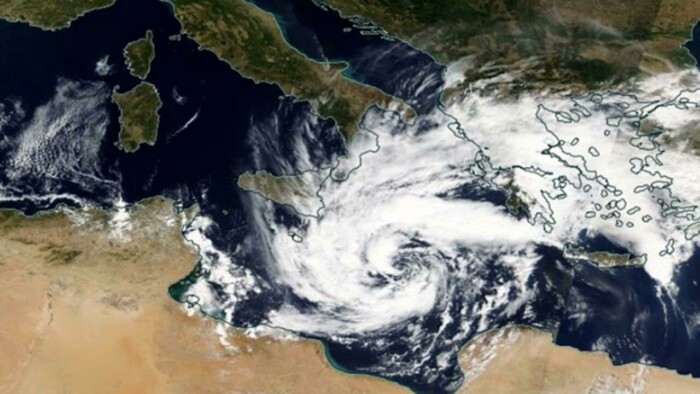
    The premises with which the Glasgow summit opened are not the best: China and Russia (which alone emit more than 30% of climate-altering gases into the atmosphere) will not physically participate in the negotiations, and in Rome, the G20 members failed to reach an ambitious pre-agreement on the climate emergency. Scientists tell us that the consequences of climate change are becoming worst and worst. Nature itself is demonstrating this through increasingly intense, frequent and alas unexpected disasters. One of the main causes is due to the latest forecast of 2.7 degrees temperature increase by the end of the century. What happened in Sicily with the Storm Medicane (Mediterranean Hurricane) is an example: scientists argued that hurricanes could not originate in the Mediterranean region, however, the climate changed and it happened.

    If we are to try to mitigate these events and ensure a long-term – at least liveable – future for the human species, Glasgow can be the right answer.

    The problems are clear, but, luckily, so are the solutions. The positive note is that the representatives of governments gathered in Glasgow will not have to equip themselves with a magic wand in search of impossible solutions and actions.

    What is asked to the governments present at COP26 is therefore a strong and unanimous will to change the policies.

    We need to put a stop to the chapter of our history that began three centuries ago with the Industrial Revolution and start a new era of ecological transition.

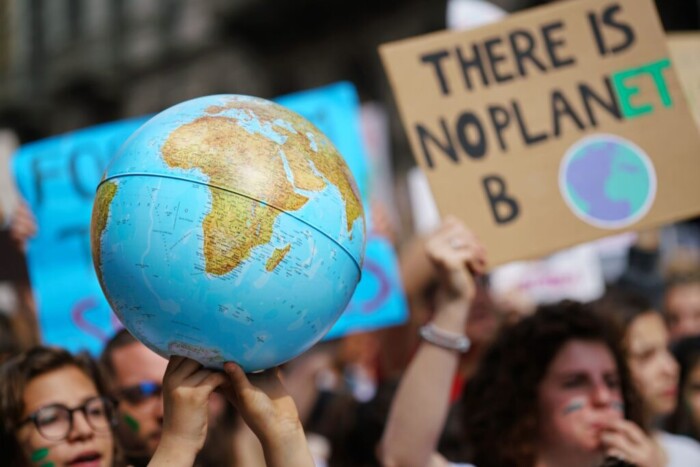
    At a civil society’s level, there is already ferment and change is already taking place, driven above all by the younger generations. Companies are also modifying their offers in line with the new needs of consumers: traceability of supply chains, compliance with high environmental and social standards, circular practices. In September of this year, a report from the United Nations warned that the Paris Agreement of 2015’s targets were too weak, leaving the planet on pace to warm by almost 3 degrees Celsius by the end of the century.


    Nowadays, only if all COP member states cut global emissions to net-zero by 2050, we could be able to limit the planet’s warming under 1.5 Celsius and thus with a positive impact on climate change.

    However, all of what has been said must become practice first and foremost at an institutional level. Politics must foster the transition, enabling citizens and businesses to make lasting choices for the environment and for the entire human community. We entrust COP26 with the hope of taking charge of these requests. Meanwhile, as a civil society, let us commit ourselves so that, through meeting and dialogue on territories, the ecological transition reaches the consciences of millions of individuals and favours the emergence of new behaviours.

    The climate crisis is here and now and it must be not only the COP to take action but everyone is called to make a contribution.

  • Shamsia Hassani – The Afghan female graffiti artist capturing women’s voices

    Shamsia Hassani – The Afghan female graffiti artist capturing women’s voices

    Ommolbanin Hassani was born in Afghanistan in 1988 and she is defined a revolutionary for her effort in introducing the conception of female artists into Afghanistan’s Islamic society. The young artist attended school in Iran, where she was forced to flee with her family when the Afghan Civil War broke out but she was not allowed to access art’s courses due to her immigrate status. The Hassanis moved back to Afghanistan after the end of the Civil War and the subsequent beginning of the American Occupation. At this point, she was able to enter university and, in 2005, she graduated at Kabul University with a degree in arts.

    She specialised in the graffiti form of art because spray cans are cheaper to afford and easier to find, particularly in a Third World Country with a never-ending conflict between the government, backed by the US, and the Taliban subversive groups. Her life until 2021, in a fairly “free” country was almost regular.  She managed to attend university, travel, express with paintings and report some connotations of the Islamic society. In 2013 she said that:” I want to make Afghanistan famous for its art, not its war.” But,  as the history repeated itself, starting by September 2021, the Taliban have already started to suppress and to isolate women from the society, they  have taken control of the country, ruling over it and  banning almost all education for women and girls, imposing punishments including stoning, lashing, and amputation, and confining women to their homes unless they are escorted by a male family member,  denying them access to most employment .

    Across the years her graffiti gave voice with her art to a mute protest and she managed to denounce the Afghan women’s situation.

    In 2013 she became famous all over the world for what she was doing and, the artist, started to receive invitation to expose her artworks in exhibitions throughout the Western Countries, especially in the US. She  also came to Italy for the Florence Biennale and, in this occasion, she was commissioned a graffiti by the City of Florence.

    Currently, she has been interviewed by The Los Angeles Times, The Guardian and The Huffington alongside with hundreds other newspaper worldwide, and, as of today, she is one of the most famous Islamic artists women.

    Personally, the kind of art she produces is not of my taste, but I recognize that the attempt perpetrated by Shamsia Hassani deserves respect and is definitely a proof that there’s always a beacon of hope, even inside one of the harshest regimes in the world.

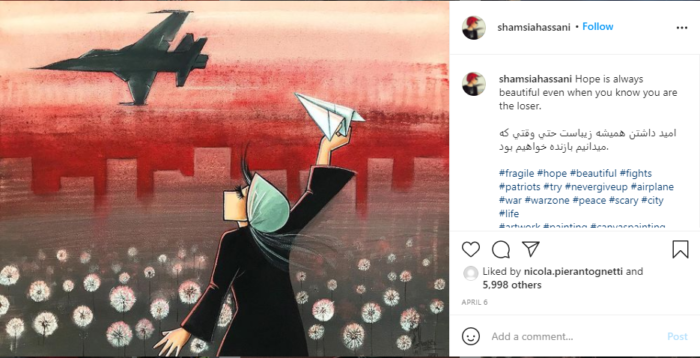
    The graffiti that I prefer was posted on Instagram on April 6, 2021 and depicts a mouthless Arab woman with a paper plane on her right hand staring to a fighter flying overhead. In the background we can see a red painted city while, in the foreground, there are some dandelions. This graffiti can have multiple meaning, I’ll try to analyse its significate starting from the date on which this was posted. Not much before the end of march, the US administration ordered the air force to relocate outside Afghan’s border in order to support the forthcoming withdrawing. From this perspective the fighter is going away, carrying with it, figuratively, the US presence there and leaving down below an unimaginable bloodshed between the Taliban and the no longer US supported Afghan military. In this instance, the girl would, probably, fly like a paper plane away from Afghanistan bringing her dreams and her hope abroad. Alternatively, the graffiti could not depict the NATO withdrawing, but on the opposite, a NATO air strike over a terrorist position that resulted in civilian casualties.

    In any case, the suffering that the Afghans have been living is inconceivable and we should ask ourselves and to our current and past leaders: “What was made in the past 20 years, has been enough to prevent other bloodshed?”

    Sadly, I think we already know what the answer to that question would be…

  • VE-Day and its legacy

    VE-Day and its legacy

    On this day, on the 8th of May 1945, the War in Europe was officially over after the signing of the unconditional surrender by the provisional German Government. This day marks the end of fascist regimes in Europe after 6 years of atrocious fighting.
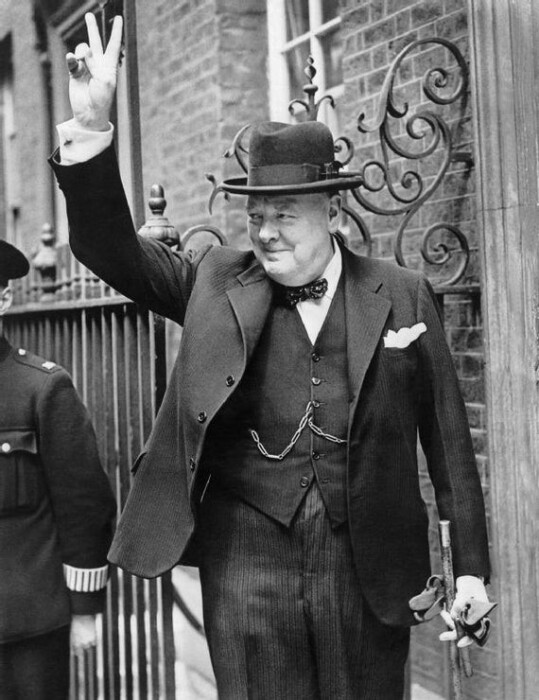
    More than 80 years ago, a man, who was appointed the Prime Minister of the UK with “nothing to offer but blood, toil, tears an d sweat”, refused to submit his Country to Hitler’s requests, he knew that the future of the world was at stake. He was carrying on his back the responsibility to choose how life would be in Europe in the following years: a life either characterized by fascist regimes or by democratic societies.
    Luckily for us, he chose “to wage war, by sea, land and air, with all our might”, and was well aware that “if we fail, then the whole world, including the United States, including all that we have known and cared for, will sink into the abyss of a new Dark Age”. This man, who I’m referring to, is the legend, the myth, Winston Churchill: a man that was able “to ride out the storm of war, and to outlive the menace of tyranny” and was able to achieve for us a free world.
    After the end of World War 2 that date has been officially and internationally, proclaimed as “Victory in Europe Day” and has been observed, particularly, in the United Kingdom since 1945, without missing a single anniversary, even during the Covid-19 outbreak in 2020 regular commemorations were held.
    So you would probably be wondering: how that date, and the decision made by this man in the past, could have affected my everyday life?
    In fact, it’s thanks to this day that we live our everyday life as we have known since we were born. If we can think, speak, live, and more in general express ourselves freely, we owe this possibility to all those men who put a “higher good” in front of their very life.
    Currently, we live in a society which guarantees freedom and equality to all the people who lives in it, having said that, is it for real like that? In fact, no.
    I’ll make an example, are we free to say everything we want whenever we want? True. Accordingly to what I just exposed; can I say something totally normal from my point of view even if it may sound offensive to somebody else? False. That’s my point, isn’t this technically a limitation of my freedom of expression? Definitely not. So, here comes the paradox of our society, when does my freedom to express begin, and, when does it end?
    Most of the time, we forget that our society is made by a majority of people who express the same idea in the same way, and, a minority of people that may express a totally different idea or the same idea of the majority in different ways. We all have our own lives, marked by our emotions and sensations, and, most importantly, we all are sensible or insensible regarding something. Cleared this aspect, we must always remember that everyone of us counts as one and everybody is free to say anything they want, provided that he won’t interfere with the right of somebody else
    Nowadays we are facing the hardest time for our western society: we are bound to make a decision that will certainly have an impact on our future. Just as 80 years ago, we shall allow everybody to express themselves freely without any prevarication or any suppression of any means. We can do it in one possible way: we must “let’s go forward together with our united strength”, remembering that we are all citizens of the same world and that we should straight up defend the existence of minorities with laws and with social campaign guaranteeing the right of expression for everyone.
    On the other hand, if we do not understand the ever simple concept that we are all human beings, everybody different and perfect with its imperfection from one another, we will be forced, in order to defend minorities to censor some words, some common expressions and, eventually, our society will be no different from the repressive societies of the past.
    I hope that we will be able to overcome this critical issue and, in the end, I hope that we will find the right balance between mutual freedom and, if our society will “last for a thousand years, men will still say: this was their finest hour.”

  • “Dantedì or Dante day, that  is the question”

    “Dantedì or Dante day, that is the question”

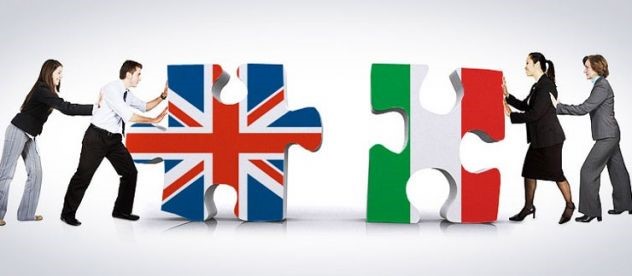
    Using English words in the Italian language seems to be becoming more and more popular these days up to be part of the Italian dictionary. It appears that Italian has a strong inclination towards Anglicism to such an extent that Italian words often tend to be substituted by English ones, even when it may not really be necessary.

    Here are just a few examples of cases in which the English terms are preferred to the Italian ones: computer, make-up, glamour, relax, love, sex, shock, fashion, style, weekend, team and many others.

    This use of an ever-increasing number of foreign words raises many questions and people wonder why Italians don’t create equivalent words in their own language, instead of importing foreign terms.

    But Italians don’t really seem to like these translations, and the debate is still open. On one side, there are those who support the introduction of foreign words, especially English words, into the Italian language, considering them as a way to show off a more international and sophisticated culture. On the other side, many linguists believe that the overuse of these words could represent a threat to the purity of the language.

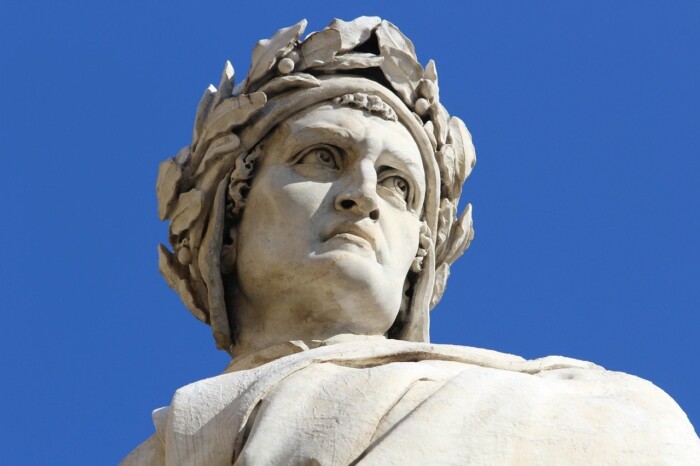
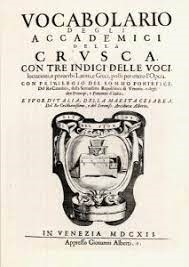
    Accademia della Crusca (Academy of the crusca /of the Bran), the oldest language academy in the world, established in 1583 in Florence (home of the Italian culture) are debating on how English words are despoiling the beauties of Italian.  On the occasion of the  National Dante Day, or Dantedì established to celebrate Dante Alighieri’s 700th death anniversary (dante alighieri , the greatest poet of Italian and world literature) the controversy of the academicians, Puritans of the Italian language, journalists haven’t appeased.  They are mortified by the way English words are despoiling the beauties of Italian and are planning a fightback.

    The academy’s President, Claudio Marazzini, has called a summit and is promising to set up a quick-response unit to “go after politicians, bureaucrats and journalists who bring English words into our language”.

    But what sort of words are worrying them? The communications expert Annamaria Testa,  enumerated hundreds, including austerity, chewing gum, download, outsourcing, public relations, politically correct, taskforce, welfare, caregiver, jobs act, bay-sitting, smart working (the latter used and soon contested by the Italian Premier Mario Draghi.

    Scholars of Italian linguistics and philology see themselves as linguistic sifters (separating good Italian from bad)  and they want to dispatch Italians who use hybrid versions of English words to a particularly fiery circle of hell: “footing” for jogging, “baby parking” for creche, “sexy shop” for sex shop, “mister” for football manager, “box” for garage.

    “It’s too late to do something about ‘car sharing’,” admits Marazzini, “but we need to find Italian words in a hurry for ‘quantitative easing.”

    The Academy motto is: “Il più bel fior ne cogli: “She gathers the fairest flower”,  a famous line by the Italian poet Petrarch and it means that the purest part of the Italian language is examined and offered. Respecting one of the most beautiful languages in the world: the Italian language is necessary to defend people’s identity and history but it’s no longer possible to avoid the language of Shakespeare and Dickens in the land of Dante and Petrarch. In a multicultural society, a community needs to resort to foreign words as an alternative for easy communication.

  • Meghan Markle’s public shocking confession: a denounciation or a publicity stunt?

    Meghan Markle’s public shocking confession: a denounciation or a publicity stunt?

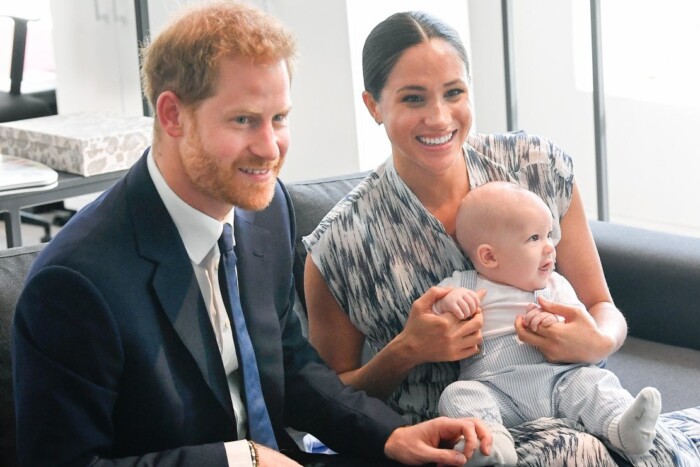
    Meghan Markle made her name as an actress, campaigner and blogger before marrying Prince Harry in May 2018 and becoming the Duchess of Sussex.

    When she became a member of the Royal Family, she gave up her acting career – and immersed herself in the life of a working royal, using the platform to highlight the charities and causes close to her heart.

    She became a mother in May 2019 but within a year she and Prince Harry had stepped away as working members of the Royal Family and started a new life in North America.

    She is now living in California and expecting her second child.

    During these three years, she’s been pretty active with her Royal duties – but the public eye has been very much focused on her behaviour.
    Once, she wore dark nail polish. How very unduchess-like! Even worse, she also closed the door of her own car. That’s unheard- of!
    The list of occasions that Meghan Markle has broken Royal protocol goes on and on. Most of them are related to her bold fashion choices. For example, she wore black from head to toe when not in mourning. She also wore no stockings underneath a skirt. Bare legs in public! It doesn’t matter if it was the middle of August… this is certainly something that the Queen strongly disapproved of.
    The problem is that the list is getting longer…
    While often described as a Royal rule-breaker, she migrated to a life free from Royal commitments and duties overseas.

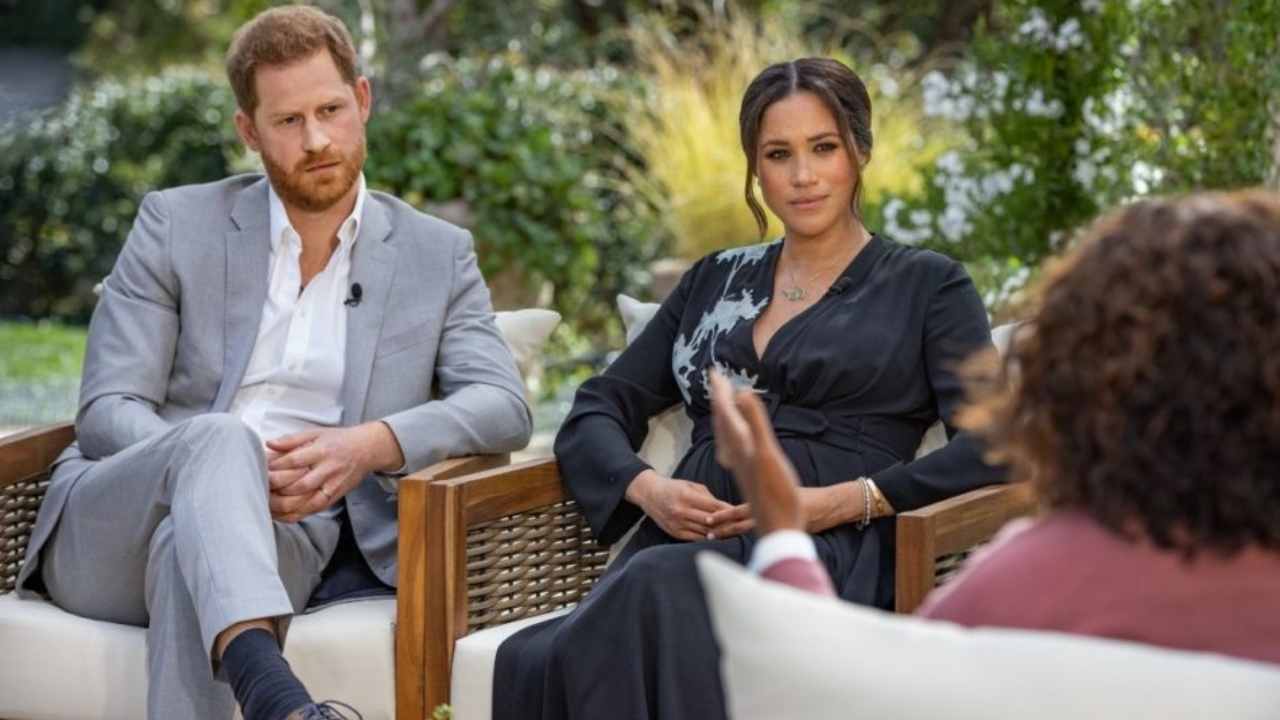
    But what happened some days ago when she together her husba nd Harry were interviewed by Oprah Winfrey, one of the most appreciate American talk show host? The interview was hold  in  Southern California, where they now live and where Meghan released shocking public confessions.

    She said her life as a British royal was so isolating and lonely at one point she “didn’t want to be alive anymore” — a stunning admission likely to rock the foundations of the centuries-old institution. Moreover, she confessed that a senior royal had “concerns and conversations” about how dark her son Archie’s skin would be.

    Queen Elizabeth II turns the tables and breaks the silence with a press release officer that leaves everyone speechless. As a great woman of power and a fine strategist (who in her long years of regency has seen all sorts of things), Queen Elizabeth was not caught unprepared and defined herself “saddened” by the suffering told by the two and the difficulties that Meghan had to deal, especially with regard to the “racial issues” brought to light by the Dukes of Sussex.

    Buckingham Palace, therefore, decided to immediately take a precise position, thus avoiding remaining in the shadows after the strong statements of Meghan and Harry.

    The situation is getting complicated if we also consider the delicate health conditions of Prince Philip, close to 100 years old and in hospital due to heart surgery. Many believe that Meghan goes down hard in the interview, but the Duchess seems to have suffered a lot and she has decided not to hide it anymore.

    To tell her truth, she chose the dangerous mechanisms of television, aware of the boomerang effect that could come. Mayb

    e she is lying to make herself a victim or she is using the race card to gain sympathy.

    What is sure is that soon Twitterati empathised with the former royal couple and their interview.

    What we can understand is that Meghan like Diana, married into a family that did not understand her and believed she would conform, without complaint, to royal customs and protocol. As with Diana, proved unable or unwilling to tow the family line, and like Diana, Meghan found herself hounded by the tabloids, the same intrusive media that has forced her to move and live a normal life away from England.

    Anyway, Prince William has declared:” “We’re very much not a racist family”, and to be honest: We believe him!


    -Giulia Franchini,

    -Davide Palumbo.

  • No vaccine, no fly?

    No vaccine, no fly?

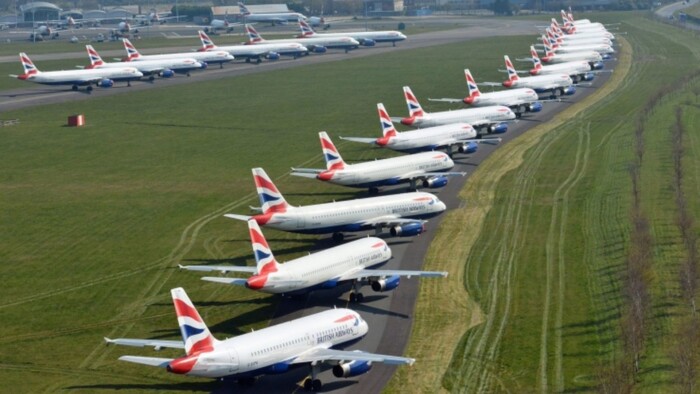
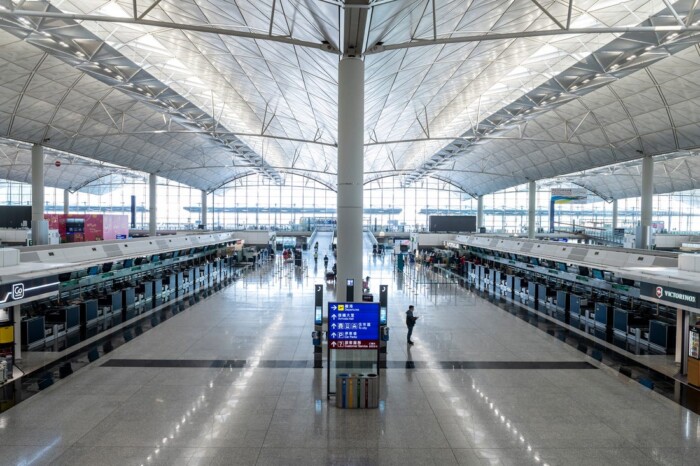
    During this year one of the most disrupted sector is certainly the air travel. When in April all the world was locked down and the borders were closed all the airlines around the world founded themselves without passengers, and so, without a revenue. Most airlines decided to ground all of their fleets or use a small percentage of it to fly cargo planes or repatriation flights, like Alitalia which flew during all the first lockdown non-stop from Rome to Hong Kong, Beijing, New Delhi and so forth.

    As of December 2020 the first vaccine is going to be given to the population and is expected that in a few months we will achieve herd immunity. The states administrations all around the world want an answer by the IATA (International Air Transport Association) on how air travel will be in 2021. IATA still does not know the answer yet, but two major airlines have already independently exposed themselves; Qantas and Delta Airlines.

    “Our position on this is clear. We have a duty of care to our people and our passengers, and once a safe and effective vaccine becomes readily available, it will be a requirement for travel on our international services,” said Mr Joyce, Qantas CEO, in comments to the media on Thursday.

    In Europe, the EASA (European Aviation Safety Agency) still follow the special guidelines for air travel: wash your hands, keep a seat empty, use of a safe mask for all the duration of the flight and so on…

    On the other hand in the US the FAA (Feder Aviation Administration) has authorized pilots and air traffic controllers to receive the COVID-19 vaccine, subject to certain conditions.

    The authorization comes as the United States Food and Drug Administration (FDA) cleared a vaccine. It is important to clarify that in the US the Covid’s guidelines are still not followed due to the position of their President: Donald Trump, a convinced negationist.

    We hope that the travel will begin again and there will be a full recovery after this pandemic. From almost a year we are waiving our youth away to reach the safeguard of elder and fragile people, we are blocked from seeing the world and explore, but, we know that these special measures are going to end and we personally hope that with this vaccine we are a step closer to win this tremendous virus.


    Giulia Franchini, Davide Palumbo IV B s.a.

  • “I can’t breathe”

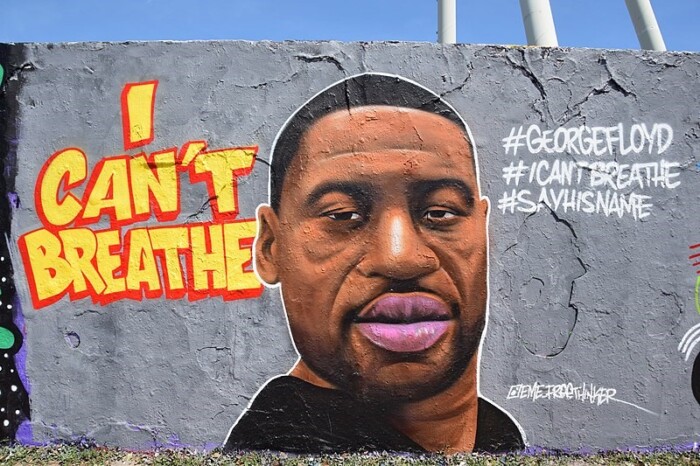
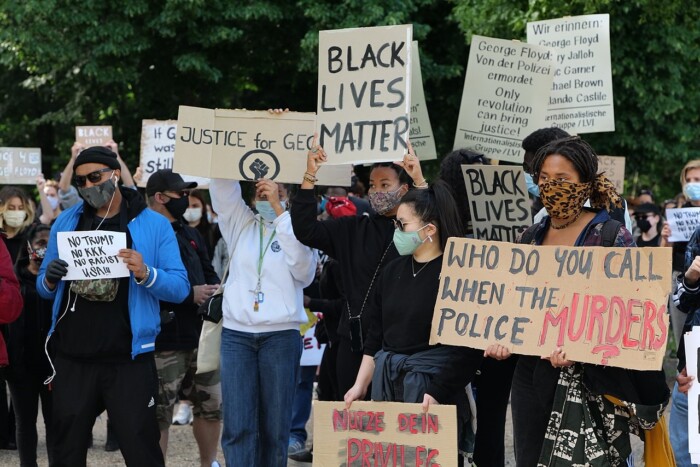
    “Please, I can’t breathe. My stomach hurts. My neck hurts. Everything hurts. … (I need) water or something. Please. Please. I can’t breathe, officer. … I cannot breathe. I cannot breathe”.  These agonising words were whispered by a 46-year-old black man while a white police officer pinned him to the ground while he was handcuffed accusing him of buying cigarettes with a counterfeit 20$ bill. The man: Mr. George Floyd was being suffocated by the police officer’s knee into the back.

    This tragic event happened on May 25 in Minneapolis (US) and a bystander video recorded the tragic incident.

    Protests against racist police brutality sweep across the United States and spread around the globe.

    Anti-racism protests have spread to Europe with protesters emphasising that racial profiling is not just an American phenomenon.

    Similar protests have also been held in the Netherlands, Germany, France, the UK and in Italy too.

    Hundreds of demonstrators are marching with different banners and claims in their hands such as: “Hands up, don’t shoot!” “We March for hope, not for hate,” and “I can’t breathe!”. But on the front line many banners are standing out with the slogan “Black lives matter”. But what does black lives matter mean?

    Black Lives Matter (BLM) is an international human rights movement, originating from within the African-American community, which campaigns against violence and systemic racism towards black people. BLM regularly holds protests speaking out against police brutality and police killings of black people, and broader issues such as racial profiling, and racial inequality in the United States criminal justice system. After George Floyds’ murder it has become anthem, a slogan, a hashtag, and a straightforward statement of fact.

    The message is central to the US protests happening right now. In my opinion “All Lives Matter” should be the right slogan because all races should join hands and stand together against racism that is the only virus that we will never eradicate. But why the problem still exists after centuries of struggles? The answer is called: “systematic racism” and it infects the very structure of our society. The deep racial and ethnic inequities that exist today are a direct result of structural racism: the historical and contemporary policies, practices, and norms that create and maintain white supremacy.

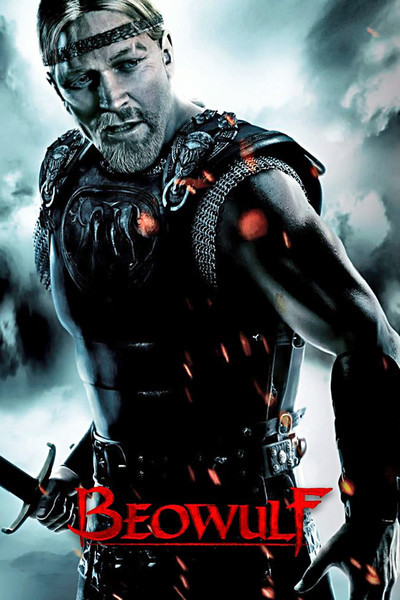
  • NEW EPIC HEROES

    NEW EPIC HEROES

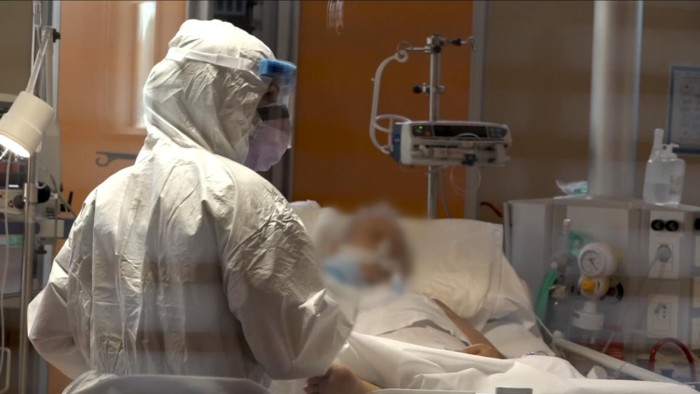
    This year we have started studying English history and literature. A very exalting topic has been the epic poem and the fascinating figure of a Scandinavian legendary hero: “Beowulf”. When our English teacher asked us what the word and the figure of a hero made us think of, our mind flew to a mythical, unreal world made of men and women endowed with deep values such as bravery, loyalty, altruism  but our attention was also focused  immediately on  those  who are on the frontline in the fight against the Coronavirus Pandemic in our real world.

    From health workers to public servants, they all are rightly getting our plaudits for their brave and tireless work in this very critical time due to this epidemic.

    But the crisis has also revealed some unexpected heroes who are showing ingenuity and community spirit to tackle the health emergency that is engulfing the world.

    In this tough period we cannot but think particularly of all those wonderful people who are providing ceaseless care and attention to those most at risk helping to provide vital support and reassurance: doctors, nurses, paramedics and the  medical staff who under enormous strain and  at their own risk  are dedicated to save lives in intense care wards  and to contain as much as possible the spread of this virus; marvelous people whose extraordinary skills make us so very proud. Other people are volunteers offering their help to do whatever they can to provide support to those on the frontline.

    And let me say in these hard times we are probably all secret heroes.

    We are all fighting against an invisible enemy. Mankind will find a way to get out of this even though right now with no cure seems the right one and no timeline available for this, we don’t know. We don’t know what’s going to happen. We don’t know how long it will last, and we don’t know how many more deaths it will take in each country. We only know that we’ re going to find a way.