Categoria: Language section

  • “What was I made for?”: the song that won the Oscar

    “What was I made for?”: the song that won the Oscar

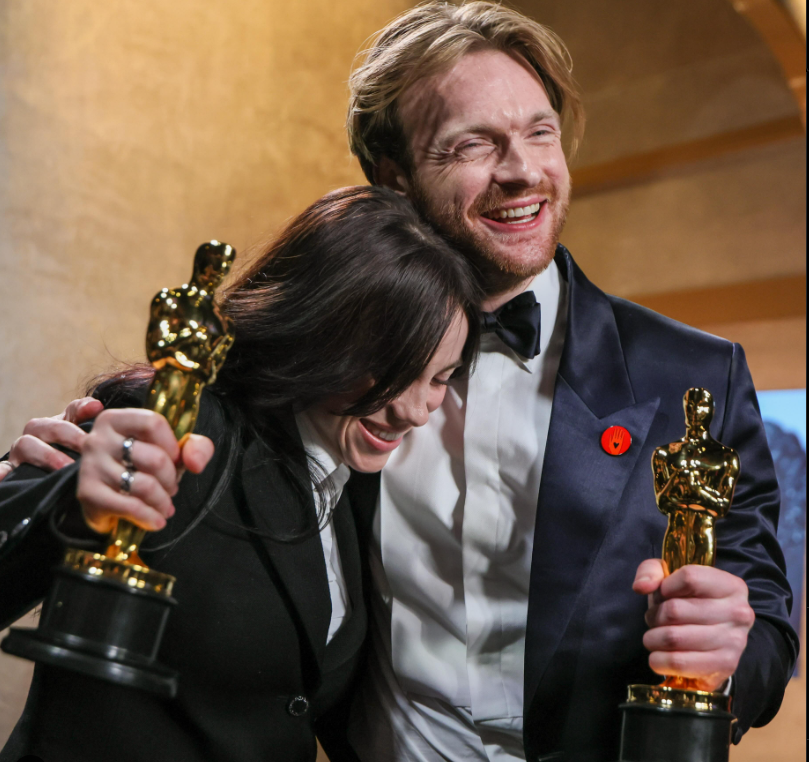
    On May 11th the Billie Eilish’s song (what was I made for) won the Oscar as “Best Original Song”, this is the second Oscar that Billie  has won (she also won an Oscar in 2022 as best original song with “No Time To Die” from the homonym film of James Bond).

    The meaning of What was I made for? is enclosed in the title. It can represent Barbie’s spiritual journey to discover herself in the real world while she is living it herself, or it can be a hymn to Billie’s personal struggles to clarify what her purpose in life is, linked to his passion for writing and music creation. She initially stated that she had not thought about herself during the song-writing process, but later came to the realization that she had unknowingly included her story.

    To Allure Billie explains:
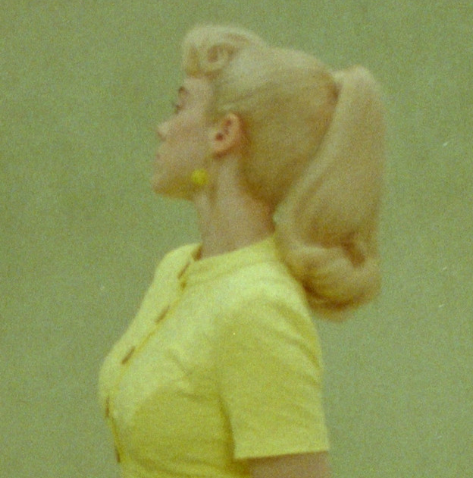
    It was as if this song was a tiny creature inside of me for years, scratching the inside of me. As soon as we got that prompt, the creature was like, ‘Okay, I’m out’. We wrote it in a period of time where we couldn’t have been less inspired and less creative. That day we were making stuff, and were like, ‘We’ve lost it. Why are we even doing this?’ And then those first chords happened and I used to float, now I just fall down came out and the song wrote itself.

    The “floating” lyric is referred to the film Barbie, where Barbie can’t float anymore so she “fall down”, it also holds a deep meaning for Billie, because it reflecting how she feels about navigating fame from a young age.

    While on one level, this lyric could refer to Ken’s inability to understand Barbie in the movie, it’s also about the sadness and loneliness that can arise when people, even loved ones, don’t truly see you and understand your feelings.

    “I … remember being like, ‘How is anyone going to know what this means? It doesn’t explain itself. No one’s going to understand it,’ Billie said. “And that was the first lyric that people understood. And I felt so heard, and related to.”

    According to some of the comments on the official music video on YouTube, “What Was I Made For?” had a profound impact on fans of all ages and walks of life:

    This song asks the question that I have (struggled) with for all of my 68 years,” another person commented. “I thought I had the answer several times, only to realize that it slipped through my fingers yet again. Ms. Eilish, your vocals here are a perfect fit for the emotion of the words and music you’ve written.

    In the music video Billie is taking from a dark box some clothes (we can say that they are her old clothes that she has worn in the past), then all is interrupted by the rain, the meaning is: “The world is falling apart while I try to keep all the old versions of myself safe”.

    Antonio Cinquegrana

    II A Linguistico

  • Augmented Reality and Virtual Reality: digital trends that  are changing  our world.

    Augmented Reality and Virtual Reality: digital trends that are changing our world.

    The digital age we live in, emerging technologies are reshaping how we interact with the world around us. Two of these technologies that are gainingmore and more  popularity are: Augmented Reality (AR) and Virtual Reality (VR).

    Augmented Reality mixes real-world elements with digital ones, creating a hybrid experience. Using devices like smartphones or smart glasses, AR technology overlays virtual information such as texts, images, or 3D objects onto the user’s view of the real world.
    A practical example of AR is Pokémon GO, an app that has grabbed the attention of millions worldwide. In this game, users use their smartphones to view virtual Pokémon overlaid onto the real world. Players can catch, train, and battle their Pokémon, creating an engaging experience that merges the real and virtual worlds.
    Another example of AR is Snapchat, a messaging and social media app that dishes out a variety of augmented reality filters and lenses. Users can slap digital masks on their faces, slot virtual objects into the surrounding scene, and even whip out interactive effects that respond to body movement.
    Virtual Reality, on the other hand, immerses users completely in a computer-generated virtual environment. Users with devices like VR headsets or glasses that cover their eyes and often ears entirely, cutting them off from the real world and plunging them into a simulated environment. In this virtual realm, users can interact with computer-generated objects and people, experiencing an engaging and realistic ride. For example, using a VR headset  you could  find yourself inside a racing video game, feeling the adrenaline pump as you speed along, even though you’re chilling in your armchair. Another example of VR is its application in training and education. Virtual simulations can be used to train airplane pilots or surgeons, letting them gain hands-on experience in a safe and controlled environment before tackling real-life situations. Live this immersive experience is possible and exalting  in Campania region too. Our region, packed with history, art, and culture, offers many chances to explore engaging experiences using Virtual Reality (VR).
    Here are some examples of virtual experiences you can live in the region!

    Pompeii Excavations: Pompeii is one of the most famous archaeological sites globally, and thanks to Virtual Reality, you can dive into an immersive experience of its ancient remains. You can wander through Pompeii’s ancient streets, explore the buildings, and get a peek into life during the Roman era just wearing a VR headset. You can also zoom in on the frescoes, mosaics, and artworks that adorned Pompeii’s wealthy citizens’ homes. This virtual experience will whisk you back in time and plunge you into the history of this fascinating city. You can explore Vesuvius’s crater and soak in a breathtaking panoramic view of the surrounding area in the same way. This virtual experience will let you explore Vesuvius safely and thrillingly.

    Don’t forget the National Archaeological Museum of Naples  that boasts a collection of artifacts from Pompeii, Herculaneum, and other ancient cities in the region. Using Virtual Reality, you can virtually tour the museum and get up close with artworks, sculptures, and ancient objects. You can also access detailed information about each artifact, enriching your knowledge and understanding of ancient Campania’s history.
    Personally, I think that a VR offers an engaging and surprising experience, allowing me to explore fantastic worlds, learn through realistic simulations, and even connect with people from all over the world in shared virtual spaces. It’s like an opportunity to escape from everyday reality, where I can experience extraordinary adventures or explore situations otherwise impossible. On the other hand, I recognize that there are also some downsides to consider. One of the main ones is the risk of social isolation. Spending too much time immersed in virtual reality could lead to disconnecting from real relationships and the surrounding environment. Additionally, there’s the risk of addiction, as the immersive experience of VR could make it difficult to detach and return to real life. Augmented reality also has its pros and cons. I find the possibility of enriching the real world with digital information and innovative interactions exciting. For example, using AR in navigation applications can make discovering new places more interesting and intuitive. However, there are also challenges to overcome. Excessive dependence on AR technology could lead to a kind of “augmented distraction,” where we focus too much on screens and lose sight of what’s happening around us. Additionally, privacy could be compromised, as AR could collect and use personal data without our consent.

    In conclusion, I believe that VR and AR are incredibly powerful technologies that offer multiple possibilities. However, it’s important to use them in a balanced and mindful way, leveraging their advantages without neglecting the negative aspects. The key is to find a healthy balance between reality and technology, using the latter as a tool to enrich and improve our lives, rather than completely replacing it.

  • Coffee as a Biofuel for London buses. A renewable alternative to fossil fuel.

    Coffee as a Biofuel for London buses. A renewable alternative to fossil fuel.

    Many actions have been undertaken worldwide to cope with climate change and to effectively reach the 2030 Agenda for Sustainable Development. It is well known that  policies for the development of enabling technologies and incentives to promote their wide applications, have been largely adopted in many cases. However, the potential contribution of changes in individual behaviours still represents an underestimated field of improvement, despite many scholars have already evidenced  how   biosolutions can help address the challenges underpinning the United Nations’ 17 Sustainable Development Goals (SDGs).  Biofuels  for example play a particularly important role in decarbonising transport by providing a low-carbon solution.

    What is biodiesel? Biodiesel is a plant fuel obtained from renewable sources, generally vegetable and animal fats. But a new approach to make biodiesel production simple comes from, unbeliavable but thruth ,  coffe ground.

    Italy has an original record: the second most drunk beverage in the country, after water, is coffee. However the first experimentation occurred in Great Britain many years ago.  Great Britain uses coffee grounds as fuel? Yes!  In Great Britain it has been  a reality for long years. 500 thousand tons of coffee grounds per year, it is estimated that this is the amount of material discarded by British citizens. Most of these wastes are then disposed of together with waste, thus contributing to the production of harmful greenhouse gases. According to the New York Times, in 2015 London buses, almost 10 thousand in total, consumed around 240 million liters of diesel. Numbers that therefore justify a search for alternative solutions. Using them to produce fuel could instead reduce the impact on the environment, limiting the amount of waste to be disposed of and reducing polluting emissions from buses. The use of coffee oil as fuel would in fact allow to reduce bus emissions by 10-15%. That’s why  there are many buses in  London,  the famous red double-decker ones that have been powered by a special fuel made from coffee grounds. Thanks to a British start-up that launched this pilot project, in agreement with the London Transport Authority. So far, 6,000 liters of coffee fuel have been produced, enough to power a city bus for a year.

    How is coffee biodiesel produced?  I am proud to explain it to you, having been involved as a student for  this year’s PCTO ( Percorso di competenze trasversali ed orientmento – Pathways for Transversal Skills and Orientation) course with the partnership of the University of Salerno – Fisciano. The innovative course and  project were  based on bioresource technology and nanotechonology for a sustainable future. I’ll explain briefly. This study proposes the development of an active biocatalyst (commercial lipase Thermomyces lanuginosus) taken from microorganisms and stabilized on a magnetic nanoparticle support for the production of biodiesel using spent coffee grounds as raw material. The biocatalyst was selected through a screening of enzymes or microorganisms capable of converting the oils present in coffee grounds into biodiesel. It was then linked to gold-coated magnetic nanoparticles to give greater chemical stability and oleic acids which create a protective barrier to prevent them from aggregating and to disperse them easily in organic solvents. Subsequently, the oleic acids were replaced with citric acid to make the nanoparticles hydrophilic (they disperse in water). Then, the reaction conditions were optimised, including temperature, pH and ratio between substrate and catalyst, also evaluating the quantity of methanol, to be inserted gradually, in order to maximize the yield and quality of the biodiesel produced. The results indicate that the developed biocatalyst demonstrated high effectiveness in transforming ground waste coffee oils into biodiesel, with satisfactory yields and acceptable quality characteristics. This  active biocatalyst is a promising strategy that  offers numerous advantages in terms of efficiency, sustainability and reduction of environmental impact. The work provides a solid basis from which to undertake further research and the development of large-scale industrial processes for the production of biodiesel from renewable sources. By the way the experts at the University of Salerno – Fisciano used  spent coffee ground (SCG)  obtained from Kimbo coffee

  • “Erasmus Adventure: A Linguist’s Journey Through Ireland with Pitagora”

    “Erasmus Adventure: A Linguist’s Journey Through Ireland with Pitagora”

    The Erasmus experience is a journey of personal and cultural growth that takes students beyond the borders of their own nation to immerse themselves in new languages, cultures, and ways of living. For many, this experience happens during university years, but for some high school students, like myself, the opportunity arose during the fourth year of attending a State linguistic high school, and I was fortunate to spend mine in Ireland. 

    As a student at a linguistic high school, the occasion to spend a period abroad was a dream come true. Arriving in a foreign country, with a culture and language different from my own, was both exciting and intimidating. However, the prospect of working as a waitress in an Irish establishment such as the Imperial Hotel in Galway made the experience even more unique and stimulating.

    My first day at work was a mix of emotions: excitement to apply my language and intercultural skills into practice, but also some anxiety about navigating a new work environment and interacting with customers in a foreign language. Nevertheless, the support of my team and the kindness of the customers made it easier to adapt and overcome the initial challenges.

    Working as a waitress allowed me to directly engage with Irish culture in ways that I wouldn’t have experienced as a mere tourist. I learned not only to serve typical Irish dishes, but also to understand the nuances of language and non-verbal communication in a work setting

    One of the biggest challenges was balancing work with studies. While I wanted to ensure that I dedicated enough time to studying so as not to neglect my academic goals, I also sought to make the most of the work and social experience offered by Erasmus. It was an exercise in time management and prioritization that taught me valuable lessons in responsibility and organization.

    But the experience wasn’t just about work and study! 

    I had the opportunity to explore Ireland’s natural beauty, visiting places like

    the Cliffs of Moher, Galway City Museum,

    and various streets and museums in Dublin. I also had the chance to make friends with people from all over the world, forging bonds that I hope will last a lifetime.

    Erasmus was a transformative experience that opened my eyes to new cultures, taught me to be more independent, and provided me with valuable language and intercultural skills for my future. Looking back, I am grateful for every moment spent in Ireland, whether as a student or a waitress, as each experience has played a part in shaping the person I am today.


  • Mon Amour, Slimane: l’amour dans une chanson

    Pour le Concours Eurovision de la Chanson (connu aussi comme Eurovision), la chanson qui représentera la France sera “Mon Amour” de Slimane.

    Cette chanson parle de la difficulté d’aimer et du fait que nous sommes disposés à tout pour l’amour, parfois nous faisons des choses impossibles aussi comme “un océan dans le feu”.

    Dans la première strophe, le compositeur pose des questions à son amoureuse, il est très timide et il a peur de paraître lourd, en fait ses phrases représentent la peur du rejet qu’une personne éprouve au début d’une relation. Pendant toute la chanson nous entendons ” Je t’aime, j’sais pas pourquoi” rapporté à l’amour au premier regard, que, parfois, nous ne pouvons/nous ne savons pas comprendre.

    Pour finir, nous pouvons dire que, la chanson se termine avec une question effrayante : “Est-ce que tu m’aimes ?”. Cette question crée un vide dans le cœur d’une personne amoureuse qui ne révèle pas ses sentiments, parce qu’elle pense que la personne aimée ne partage pas les mêmes sentiments à son égard. Hélas, nous souffrons par amour « tu n’entends pas ma peine ? » en raison de la complexité des émotions.

    L’amour est un sentiment qui brise les barrières émotives et qui donne un sens profond à nos vies. Il y a beaucoup de types d’amour : tel l’amour entre un homme et une femme, deux femmes, deux hommes, l’amour parental, ou aussi l’amour platonique.

    Le seul véritable Amour est celui où deux personnes s’aiment et ont le respect mutuel, sans violence ou discrimination.

    Antonio Cinquegrana

    II A Linguistico

  • Oppenheimer: the father of the atomic bomb

    Oppenheimer: the father of the atomic bomb

    Who was J. Robert Oppenheimer? Why was he considered the father of the atomic bomb?

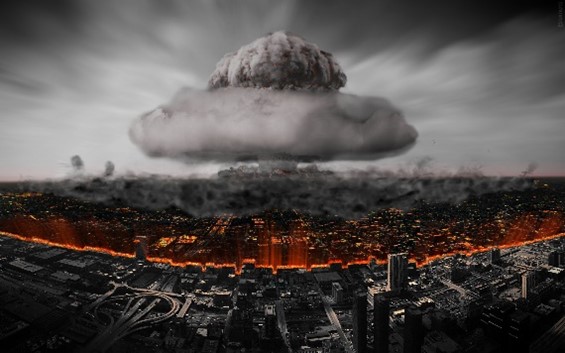
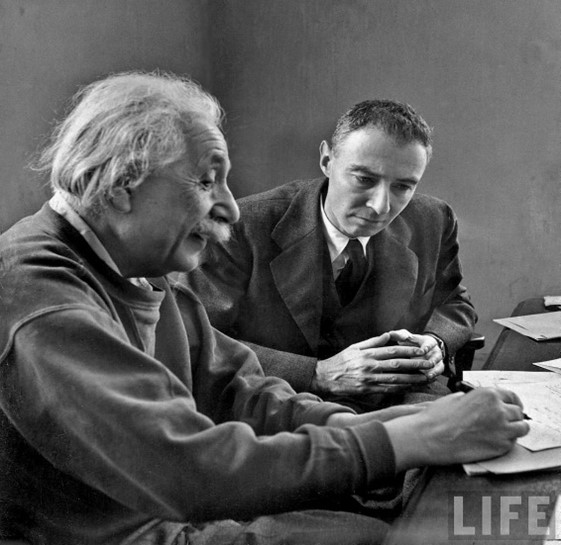
    Oppenheimer graduated in chemistry from Harvard University, but was drawn to physics in Cambridge in the UK and then in Göttingen in Germany, one of the world’s leading centres for theoretical physics. Returning to the US, he worked at the University of California and the California Institute of Technology, conducting research in many scientific fields, including nuclear physics, quantum field theory and astrophysics and  found himself in Germany. During his time in Germany, he published many papers contributing to the newly developed quantum theory.  During World War Two, eagerly joined the early efforts his country was making to develop a nuclear weapon. . He became director of the Manhattan Project’s Los Alamos laboratory the top-secret U.S. project to develop the atomic bomb. After Oppenheimer had selected a location in Los Alamos, New Mexico, the U.S. Army went about constructing a series of laboratories there. Just three years after the project began, Oppenheimer and his team were ready to test their atomic bomb.  “I guess it worked” were his first words while experimented it and unfortunately it really worked . On 6th August America dropped two atomic bombs on the Japanese cities of Hiroshima and Nagasaki, effectively bringing an end to the Second World War.  Known as “Little Boy”, the uranium bomb exploded with about thirteen kilotons of force. Up to 166,000 people are believed to have died following the explosion. After five years there were around 230,000 people killed directly or indirectly by the bomb’s effects, including burns, radiation sickness and cancer. On 9th August a second atomic bomb was dropped on Nagasaki – a 21-kiloton plutonium device known as “Fat Man”.  It is estimated that between 40,000 and 75,000 people died immediately, while another 60,000 people suffered severe injuries. Japan surrendered on 14 August 1945. Oppenheimer resigned as director of the Los Alamos laboratory.  Considered a son of bitch by U.S:President  Harry Truman he became an Atomic Energy Commission advisor, but then  he  lost the position by opposing the development of a hydrogen bomb. In 1954, Oppenheimer was officially accused of being a Soviet spy and later  he had associated with Communist Party members, and certainly Soviet spies had intercepted the Manhattan Project, but there was no evidence. Oppenheimer helped establish the World Academy of Art and Science along with Albert Einstein. Until his death of cancer throat in 1967, Oppenheimer continued lecturing around the world. In 1963 he was given the Enrico Fermi Award by US President John F. Kennedy. the film borrows liberally from the book as it surveys Oppenheimer’s life. In his later years, Oppenheimer continued to lobby for international control of nuclear weapons and atomic energy.

    I suggest to see the movie: Oppenheimer. It was realesed on 21st July and  I’m still collecting my thoughts after experiencing it.  It is  an epic biographic thriller  and  surpasses Bohemian Rhapsody, which previously held the box office record for this kind of films.  It subverts the usual biopic formula to create a  layered examination of a man throughout all of his incredible accomplishments and fundamental flaws. This film is a masterclass in weaving narratives and different time periods. One downside: it’s too long so if you are not interested in this genre it’s better to do something else but I assure it is an authentic audio-visual journey to the era of the birth of atomic genesis.

  • Shakespeare is back

    Shakespeare is back

    On 15th February many classes of our Liceo spent some carefree hours in Pompei attending a “revolutionary” theatrical version in English .  It was  a youthful, lively and interactive show conceived by Klimax theatre company that offered a revisited, modern, ironic, and captivating performance entitled: “Shakespeare is back”.
    Shakespeare is back combines Shakespeare’s work with the language of young people with the aim of helping them understand that the world described by Shakespeare is not so far from the one in which we live and that reading of his works can shed light on the needs, beliefs and doubts of the contemporary world.

    During the performance William wore  the clothes of a dj  who lived in Italy, a country  that inspired  some of his plays centuries ago. He told his biography together with his plays, at the beats of a console. There were five dance moments during the show that gave life to a dance-tale  experience for the students. Moreover he shared the stage with the characters of his most important tragedies and comedies: Romeo, Desdemona, Juliet, Lady Macbeth, Hamlet, Mercutio, Tybalt, Iago, Yorick, Othello and the Nurse that came alive specifically for him and for us too. The Spook returns was the leit motiv of the show and was repeated just like a mantra over and over by the audience to call each time the main characters of his plays. His famous “Sonnet 18” was offered in a very modern version , as a famous trap hit of the moment. I wonder why if after over four hundred years Shakespeare’s s plays and sonnets  are as vivid and alive today as they were back then. But with so many modern writers,  why should students continue to study Shakespeare? There are many reasons why everyone should be encoraged to read the works of one of the world’s greatest literary giants. His works  continued to be relevant because the themes he covered are timeless and universal. His plays are about revenge, love, marriage,  power, ambition, murder, obssession, dreams,  loyalty,  death, envy and more.  He deals with the majesty of kings,  witchcraft,  family,  jealousy, friendship -there is no area of human emotion that isn’t somewhere in Shakespeare.  Shakespeare had  a wonderful way of exploring is characters’inner lives and desire,  and describing their emotions  in fact many have become the accepted model or archetype for an emotion. When we think of ambition we think of Macbeth,  love and passion- Romeo and Juliet; the evil influence of jealousy- Othelo, welf.doubt-Hamlet, and there are many more. Then there is his language Shakespeare introduced more new words and phrases into the English language than any other playright and  most of them are still in use today. Isn’t it enough!

  • COLDPLAY AND THEIR GREEN TOUR

    COLDPLAY AND THEIR GREEN TOUR

    In the music industry a concert or even just the production of albums and singles generates a high environmental impact. It is estimated that a single concert can produce between 2 and 10 kgs   of CO2 per spectator, considering the huge amount of plastic and litter that is accumulated in the environment. In this regard, many artists are working to make the world of music more sustainable, including Coldplay, a British band formed in 1997 in London. The group conquered the world stage and managed to write their name in the history of music of the 2000s, thanks to their debut album “Parachutes”. Since 2000 they have committed themselves, in addition to pursuing their musical career, to make this industry eco-friendly. Chris Martin, Jonny Buckland, Guy Berryman and Will Champion are the leaders of this new green project. In 2019 the British band decided to stop the concerts, to make them more environmentally sustainable. In an interview with the BBC Martin explains how important it is for the band to carry out an initiative that can reduce plastic and use renewable energy such as solar energy, but above all to share awareness to the new generation. “We’re taking time over the next year or two, to work out how our tour can not only be sustainable, but also how it can be actively beneficial” -“Our dream is to have a show with no single use of plastic and to have it largely solar powered”. -Martin.
    When Coldplay started their “Music Of   The Spheres”  World Tour in 2022, the goal was clear: make their tour even more sustainable and environmentally friendly! This initiative also includes very interesting technological aspects: charging their shows with bikes and dance floors, building bamboo sets and planting a tree for each ticket sold! The concert becomes an interactive concert, in which everyone participating can make an important contribution to the live experience. Study figures show that Coldplay have so far emitted 47% less carbon dioxide emissions during their world tour, compared to the 2016 and 2017 tours. The band is proud of the result achieved and has thanked all those who supported this project, obviously their audience and several environmental NGOs such as The Ocean Cleanup and ClientEarth (a team of lawyers who protect the environment). What are the key points of this ecological tour? Coldplay claimed to charge the show (audio, lights, lasers) thanks to electric batteries that allow to use 100% renewable energy in the most efficient way possible, in addition to solar energy they also use other ways to produce energy. To recharge the batteries of the show they use the energy generated by platforms installed on the lawn, such as dance floors, which use the kinetic energy produced by the public in motion, to generate electricity. In some lawn areas there are also simple bikes, mounted on special fixed structures, able to produce electricity through pedalling. Of course, these two solutions are not innovations created by Coldplay, however, it is the use of these alternative ways in a musical context, which makes this idea brilliant and functional! To avoid the consumption of plastic related to the light up bracelets, they ask all participants of the show to return the bracelet, so that it can be reused at the next concert. They use biodegradable confetti and help the environment by planting a tree at each ticket sold, to absorb a greater amount of CO2 than the one produced by the tour. The project was appreciated  and it’s hard to deny that Coldplay are pioneers for the future of sustainability in live music.  This is another reason why I’m crazy for them.

  • Cristiano Ronaldo: the G:O.A.T.!

    Cristiano Ronaldo: the G:O.A.T.!

    G.O.A.T. is the nickname that in sport, but especially in football, is given to the person who is considered the best of all time. When I ask my friends and classmates who they believe to be the strongest footballer between CR7 and Messi, most of them   answer without any hesitation : Cristiano Ronaldo dos Santos Aveiros. Well, if we take into consideration the individual teams, Ronaldo scored 450 goals for Real Madrid, making him the best scorer in the history of the Madrid club in La Liga. Messi, however, made 672 for Barcelona, also becoming his club’s top scorer, but the most appreciate footballer and the most followed soccer player on social media is always Cristiano Ronaldo. Moreover he also won the FIFA best player in the world award five times, 5 Ballon d’Or and the UEFA best player award four times. Who’s got more to share?”  I think you have understood, don’t kid around I am also among the millions of fans and amateur footballers who admire his achievements that are genuinely astonishing, and his dedication, in terms of physical conditioning, is perhaps unmatched. However I read something of him that has made him even more admirable in my eyes: first he makes donations for young fans’ surgeries, the reconstruction of destroyed homes, or hospital sponsorship second despite of his  immense popularity, crowds of fans, millions of followers, and huge success hasn’t influenced any of  Cristiano’s basic values: family is still the most important thing for him. Last but not the least he is a strong, confident, and very sensitive person. Experiencing a wide range of feelings, Cristiano isn’t afraid to express them in public. Whether they’re positive or negative, he cries, laughs, and celebrates with the same passion. Most of all I like his playing style. He is extremely fast without the ball and it’s very hard to keep up with him. All that makes him the most gifted athlete.

  • CAMBRIDGE AWARDS CERIMONY: PREPARATION CENTRE AWARDS 2023-2024

    CAMBRIDGE AWARDS CERIMONY: PREPARATION CENTRE AWARDS 2023-2024

    UPPER SECONDARY AWARD TO OUR LICEO PITAGORA-B.CROCE

    The latest edition of the Preparation Centers Awards was held in Rome on 21 November 2023, in the spectacular setting of Villa Wolkonsky, residence of the Ambassador of the United Kingdom. The title of “Best Upper Secondary School went to our Liceo Pitagora-B.Croce. The event recognised and celebrated the outstanding achievements of  high number of students of our liceo who attended language courses  and the excellent  results  for Cambridge exams. It was definitely a great team effort. The first thank you is for our  Headteacher  who believes in her students and teachers and she  believes in language teaching but we’d like to thank immensely the Cambridge Platinum Centre Einsteinweb. This centre based  in Torre Annunziata  is a  centre of excellence for Cambridge exam preparation  and supports our school that is accredited to the ILTE (Improves life through education) a claim coinceveid by it and that allows our school  to be the location for the Cambridge English exam and a preparation center too. Einsteinweb centre has developed a complete training offer, with native speaking teachers, official Cambridge teaching material and above all computer based exam. It offers  as much flexibility as possible,  in any  form of support  our school needs. Their aim is simply to give  students the tools to prepare them to take Cambridge exams  in the best possible way. Cambridge Platinum Centre Einsteinweb.
    Thanks to a perfect synergy among our headteacher, the English teachers of our school, our students and of course to the preparation centre, students are motivated because we know that we need to learn English, perhaps because we  aspire to something more and the English certification allows us to communicate easily in the world but also  to get to university by skipping the English exam or we can  benefit from it by finding a job abroad and above all this article  debunks the untrue rumor that Italian students are the worst in Europe at speaking English.