
Categoria: Inglese

  • When the Finish Line Isn’t Just Human

    Yesterday evening, while watching RAI, I came across somethingthat quietly stayed with me long after the program ended. It wasn’tpresented as shocking or extraordinary. In fact, the tone wasalmost calm, as if what I was seeing had already become part of our world. A robot running a marathon.

    The event took place in Beijing, where humanoid robots joinedhuman runners in a long-distance race. Among them, one stoodout: a robot capable of completing the course with remarkableefficiency and balance. Watching it move was strange, not becauseit looked clumsy or unnatural, but because it didn’t. Its steps weresteady, almost confident, as if running was no longer somethingthat belonged only to us.

    What struck me most was not the technology itself, but how easilyit fit into the scene. There were no dramatic reactions, no sense of disbelief. Just runners, human and artificial, sharing the sameroad. It made me wonder: at what point do we stop seeing theseinnovations as “future” and start accepting them as part of everyday life?

    Robots like these are the result of years of research in artificialintelligence and engineering. They can calculate movements, adapt to terrain, and maintain balance in ways that wereimpossible not long ago. In some ways, they represent the best of human creativity — our ability to solve problems and pushbeyond limits.

    But there is another side to consider. If machines can run, think, and learn, what will remain uniquely human? Will we measureourselves against them, or will we redefine what it means to be human altogether? There is also the question of dependence: astechnology becomes more capable, we risk relying on it too much, losing skills we once considered essential.

    At the same time, it would be unfair to see this progress only as a threat. Artificial intelligence and robotics have the potential to improve our lives in countless ways — from medicine to environmental protection, from safety to accessibility. A robot running a marathon might seem symbolic, but it is also a sign of how far we have come.

    In the end, what I saw was not just a race, but a symbol of the future. A future that can be both positive and negative—depending on how we decide to guide it.

  • A Modern Dream on Stage

    A Modern Dream on Stage

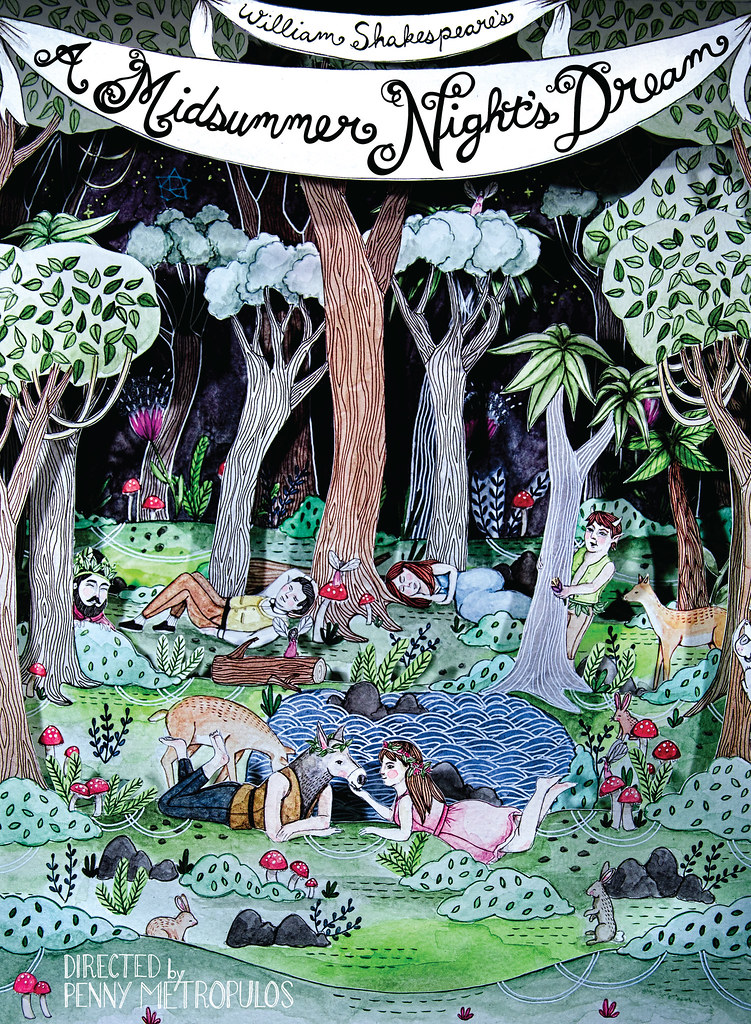
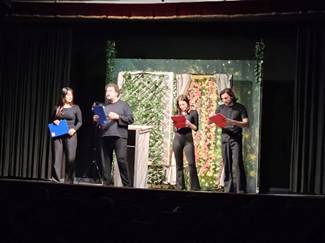
    On March 31st, my class attended a performance of A Midsummer Night’s Dream at the Nexus Theatre in Pompei, performed by the The Frogs Theatre Company.

    This version of William Shakespeare’s comedy was presented as a modern musical, full of humor, pop culture references, music, and engaging choreography. The actors also interacted with the audience, making us feel part of the show.

    The primary protagonists are the four Athenian lovers—Hermia, Lysander, Demetrius, and Helena—whose romantic conflicts drive the plot. In this adaptation, their story becomes even more lively: the two couples fall under a magical spell and are dragged into a world of dreams, confusion, and madness. The play shows that love can be chaotic and irrational, but also the most powerful force of all.

    The company brought the classic into a contemporary setting, mixing modern English with Shakespearean language. This made the story easier to understand and more enjoyable for students.

    Personally, I really liked the performance because it was fun, dynamic, and different from the usual idea of theatre. As a student, I found it interesting and engaging, and it helped me see Shakespeare in a new way.

    In conclusion, this adaptation was both entertaining and meaningful, proving that even a classic can still speak to young audiences today. As Shakespeare wrote, “Love looks not with the eyes, but with the mind.”

    Angelo Maria Avvisati

  • URBAN ART THAT MAKES THE DIFFERENCE

    URBAN ART THAT MAKES THE DIFFERENCE

    While watching a science TV program a few days ago, I discovered something that really fascinated me. The program was talking about air pollution and new ideas to fight it. The theme of pollution is very important today, especially for young like us, because it affects our health and our future.

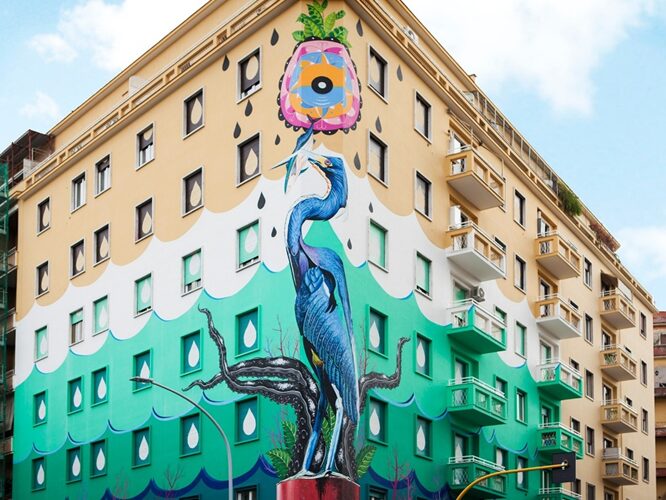
    During the program, they explained that most of these murals are created on large building facades (buildings used as canvases), often in heavily trafficked areas or in neighborhoods that are being renovated, covering entire condominium walls in Rome.

    I was surprised and curious: how can a painting reduce pollution? The answer is something called photocatalytic paint, also known as “smog-eating paint”. These murals are not only nice to look at — they also help clean the air. This is possible thanks to a special kind of paint called photocatalytic paint, often known as “smog-eating paint”.

    Airlite: la vernice che "mangia" lo smog

    What Is Smog-Eating Paint?

    Photocatalytic paint contains special substances that react when they are hit by sunlight. One of these substances is titanium dioxide. When the sun shines on a wall painted with this material, a chemical reaction starts. This reaction helps break down harmful pollutants in the air, such as nitrogen oxides, which are part of smog.

    For example: the green mural by Maria Ginzburg near Garbatella actually transforms approximately 5.54 g of nitric oxide per day into inert salts, absorbing the daily smog produced by nearly eight Euro 6 petrol cars.

    In simple words, the wall “eats” pollution and helps make the air cleaner. So, while people admire the colors and creativity, the walls are also working silently to reduce air pollution. This is especially important in a big city like Rome, where traffic and cars produce a lot of smog every day.

    Combining art and science is a smart way to improve the quality of life for citizens.

    Art, Science, and Responsibility

    Projects like these show that art is not only about beauty — it can also be about responsibility. Young people, artists, scientists, and local institutions can work together to create a better future. Urban art can send powerful messages about climate change and sustainability.

    In my opinion, respecting the environment is not only a duty, but also a responsibility towards future generations. And if creativity can help us protect our planet, then we should definitely encourage it.

    Some eco-murals to visit in Rome include:

    • Ostiense (Hunting Pollution)
    • The area near Garbatella (As Above So Below and Urban Fragments)
    • Torre Angela (Fiori che respirano)
    • Pietralata (Usawa)

    Angelo Maria Avvisati 5ASA

  • A Young Scientist Fighting Microplastics

    A Young Scientist Fighting Microplastics

    Microplastics are one of the most serious environmental problems today. They are tiny plastic particles that pollute oceans, rivers, and even drinking water, harming animals, ecosystems, and human health. For this reason, new solutions are urgently needed.

    A very inspiring example comes from Sheyna Patel, a 14-year-old student at Orlando Science Schools (Florida) and a young researcher who designed a special hydrogel capable of removing up to 93% of microplastics from water. This material works by attracting and trapping microplastic particles, making water cleaner and safer. Her invention shows how science and creativity can help protect the environment.

    What makes this discovery even more impressive is that it was developed by a young person. It proves that age is not a limit when it comes to making a difference. Innovations like this give hope for a more sustainable future and show the importance of investing in scientific research.

    Sheyna Patel’s project made me reflect on my own responsibility. We often think that environmental problems are too big to solve, but this invention shows that change is possible. As students, we can start by reducing plastic use, recycling correctly, and being more aware of our daily choices. Even small actions, together with scientific progress, can help protect our planet.

    Angelo Maria Avvisati 5Asa

  • Italian Cuisine: A Heritage to Protect

    Italian cuisine has recently been recognized as Intangible Cultural Heritage of Humanity by UNESCO. This important recognition took place on December 10th, 2025, during the 20th UNESCO Intergovernmental Committee meeting held in New Delhi, India. UNESCO, the United Nations organization that protects cultural heritage around the world, awarded this title to Italy for the value of its food traditions.

    This recognition shows that Italian cuisine is not only about good food, but also about culture, history, and identity. Italian cooking is based on simple and genuine ingredients, traditional recipes, and respect for local products. Every region has its own specialties, which are often linked to family traditions passed down through generations.

    Today, Italian cuisine must be protected from imitations and loss of authenticity. Many traditional dishes are changed or copied, losing their original quality. Safeguarding Italian food means protecting its excellence, genuineness, and traditions, and supporting local farmers and producers.

    From a personal point of view, I think Italian cuisine represents who we are. Cooking and eating together are moments of sharing and connection, not just daily habits. When I travel, I enjoy discovering other cultures and traditions, especially culinary ones. I like tasting new dishes and learning how food reflects different ways of life. However, even after coming into contact with many cuisines, I cannot help appreciating Italian cuisine the most. In my opinion, it stands out for its simplicity, quality of ingredients, and strong connection to tradition. For these reasons, I consider Italian cuisine the best among all those I have experienced.   When I eat a traditional Italian dish, I feel part of a long cultural history.

    For these reasons, Italian cuisine should be respected and preserved. Choosing authentic products, valuing quality over quantity, and keeping traditions alive are small but important actions that can help protect this precious heritage for future generations.

    Italian cuisine has recently been recognized as Intangible Cultural Heritage of Humanity by UNESCO. This important recognition took place on December 10th, 2025, during the 20th UNESCO Intergovernmental Committee meeting held in New Delhi, India. UNESCO, the United Nations organization that protects cultural heritage around the world, awarded this title to Italy for the value of its food traditions.

    This recognition shows that Italian cuisine is not only about good food, but also about culture, history, and identity. Italian cooking is based on simple and genuine ingredients, traditional recipes, and respect for local products. Every region has its own specialties, which are often linked to family traditions passed down through generations.

    Today, Italian cuisine must be protected from imitations and loss of authenticity. Many traditional dishes are changed or copied, losing their original quality. Safeguarding Italian food means protecting its excellence, genuineness, and traditions, and supporting local farmers and producers.

    From a personal point of view, I think Italian cuisine represents who we are. Cooking and eating together are moments of sharing and connection, not just daily habits. When I travel, I enjoy discovering other cultures and traditions, especially culinary ones. I like tasting new dishes and learning how food reflects different ways of life. However, even after coming into contact with many cuisines, I cannot help appreciating Italian cuisine the most. In my opinion, it stands out for its simplicity, quality of ingredients, and strong connection to tradition. For these reasons, I consider Italian cuisine the best among all those I have experienced.   When I eat a traditional Italian dish, I feel part of a long cultural history.

    For these reasons, Italian cuisine should be respected and preserved. Choosing authentic products, valuing quality over quantity, and keeping traditions alive are small but important actions that can help protect this precious heritage for future generations.

    Angelo Maria Avvisati 5Asa

  • Girls Go Circular

    An online meeting that made us think

    On December 16th, 2025, during our school Student’s Week, our class took part in an online orientation meeting on Zoom called “Girls Go Circular Textiles.” It was an interesting experience that helped us reflect on fashion and its impact on the environment and society.We often buy clothes without thinking about where they come from, how they are made, or what happens to them after we throw them away. During the meeting, interactive tools like Mentimeter were used to answer polls and quizzes. This made us realize that our everyday choices can have a much bigger impact than we imagine.

    Sustainable fashion and greenwashing

    The meeting focused on important topics such as slow fiber, which promotes natural, long-lasting, and ethically produced materials, in contrast to fast fashion. We also discussed greenwashing, when brands claim to be sustainable only for marketing reasons. This part showed us how important it is to be informed and to think critically before buying clothes. Different alternatives to fast fashion were presented, including vegan fashion, clothes rental, fair fashion, and new technologies for sustainable materials. However, one key message was clear: technology alone is not enough. Our personal choices matter.

    Upcycling: giving clothes a second life

    One of the most practical and creative topics was upcycling. Turning old clothes into new items helps reduce waste and encourages creativity. For example, old jeans can become a bag, a t-shirt can turn into a shopper, and a worn sweater can be redesigned. We learned that clothes do not lose their value just because they are old.

    My personal reflection

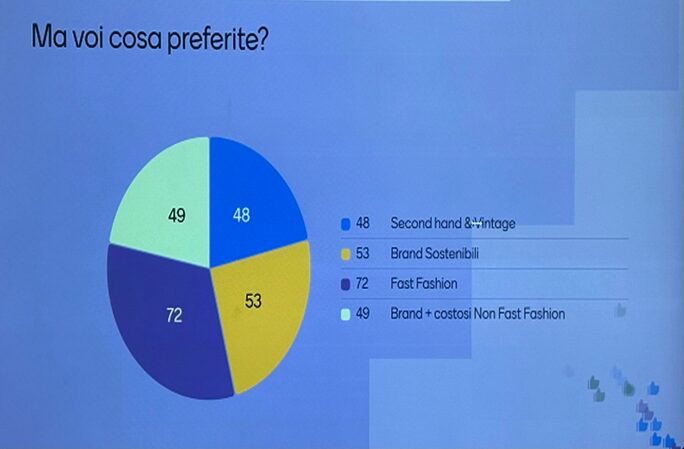
    During a survey about the brands we usually buy, it became clear that fast fashion is still very popular, mainly because it is cheap and convenient. This made us ask ourselves an important question: are we really ready to change our habits?

    The final quiz on circular fashion was not just a test, but a moment of reflection. Personally, this meeting helped me understand that even small actions can make a difference. Buying less, choosing better quality, reusing and upcycling are simple steps that can lead to more responsible fashion choices. Fashion is not only about trends—it can also be a tool for social and environmental responsibility.

  • A Night to Remember: Lady Gaga’s Epic Concert at Copacabana Beach

    A Night to Remember: Lady Gaga’s Epic Concert at Copacabana Beach

    On the 3rd of May, 2025, Lady Gaga took the stage for a truly historic concert at the world-famous Copacabana Beach in Rio de Janeiro, Brazil. The concert, part of her “Chromatica World Tour,” attracted thousands of fans from all over the world, making it one of the most talked-about events of the year.

    The setting itself was extraordinary. Copacabana Beach, with its golden sand stretching for miles and the sparkling blue waters of the Atlantic Ocean, provided the perfect backdrop for a  spectacular performance. Her incredible stage presence and her energy dazzled the crowd with a mix of her greatest hits, as well as songs from her latest album, Chromatica.

    The concert was not just a musical event; it was a celebration of the connection between art and the environment. The stage was designed to blend with the natural beauty of the beach, and the night was filled with stunning visuals, from the bright lights of the stage to the beautiful sunset that framed the entire experience. Fans from all over the world travelled to Copacabana for this unforgettable event, making it a truly global celebration of music and culture.
    While the concert itself was an extraordinary experience for Lady Gaga’s fans, it also highlighted the potential of using iconic locations for large-scale events. Imagine being able to attend a concert right by the ocean, feeling the sand beneath your feet, and sharing the experience with thousands of people from all over the world. It’s a concept that blends music, nature, and togetherness in a way that few other events can.

    It’s important to underline that the concert at Copacabana was part of an annual public event organized by the city of Rio de Janeiro called “Todo Mundo no Rio” (“Everyone in Rio”). The event was funded by the city of Rio and private sponsors, with the goal of offering a high-quality cultural experience while boosting the local economy through tourism and commerce. Although the concert was free for the public, it had a major economic impact, generating significant revenue for the city.
    I’m not exactly a wild-eye fanatic of Lady Gaga fan but I have to admit that the idea of a massive concert on such an iconic beach is truly fascinating. Moreover, I’ve always loved the idea of that beach, and I really hope to visit it someday. .

  • From red carpet to rocketship

    From red carpet to rocketship

    On April 14, 2025, a historic event took place as six women traveled to space aboard Blue Origin’s New Shepard rocket. This mission was special because it was the first all-female crewed spaceflight since 1963.
    The six women on the flight were:

    • Katy Perry – A famous pop singer known for her hit songs.

    • Gayle King – A well-known journalist and TV personality.

    • Lauren Sánchez – A pilot and journalist, and fiancée of Jeff Bezos, the founder of Blue Origin.

    • Aisha Bowe – A former NASA rocket scientist and CEO of STEMBoard.

    • Amanda Nguyen – A bioastronautics researcher and civil rights activist.

    • Kerianne Flynn – A film producer and nonprofit worker.

    The flight lasted about 10 minutes and 21 seconds, reaching the Kármán Line, which marks the boundary of space. During the flight, the crew experienced weightlessness and saw breathtaking views of Earth.
    This mission was significant not only because of its all-female crew but also for its potential to inspire young girls around the world to pursue careers in science, technology, engineering, and mathematics (STEM). However, the flight also sparked discussions. Some people questioned the cost and purpose of space tourism, especially during challenging times. In response, Gayle King defended the mission, emphasizing its role in advancing technology and inspiring future generations.
    In my opinion, even though some say space travel like this is just for fun or for rich people, I believe it can truly inspire the next generation. Maybe one day, someone from our school—boy or girl—could become an astronaut too.

  • Together for Europe

    Together for Europe

    On a sunny afternoon in the heart of Rome, thousands gathered in a peaceful demonstration that echoed the sentiment of unity and hope for a brighter future for Europe. The words of the event, “Together,” rang through the streets as a powerful reminder that the challenges we face today are not isolated — they are shared by all, and the strength to overcome them lies in solidarity.

    The demonstration, aimed at reaffirming the values of peace and cooperation across Europe, came at a time when many felt uncertain about the world’s political landscape. Since the election of Donald Trump, concerns have arisen about the direction of international relationships, especially across the Atlantic. The fear of division and growing nationalism seems to be a pressing issue for many, but the gathering in Rome offered a much-needed counterpoint: a collective call for harmony, solidarity, and shared progress.

    One of the most significant elements of the demonstration was its alignment with the United Nations’ Sustainable Development Goal 17 of Agenda 2030, which stresses the importance of collaboration, with nations working together, fostering partnerships across governments, the private sector, and civil society. The event in Rome became a powerful reminder that the challenges we face today can only be addressed through collective action and cooperation on a global scale.
    My thought goes to the meditation of John Donne, the renowned 17th-century poet and philosopher, “No man is an island, entire of itself”, I really like it because Donne states that every man is a piece of the continent, a part of the main.” His reflection serves as a timeless reminder that we are not solitary beings; our lives are intertwined with those of others. Europe’s demonstration in Rome was a testament to the power of unity.where nations are bound by mutual respect and cooperation.

  • Roccaraso Ski Resort Overwhelmed After TikTok Promotion

    Roccaraso Ski Resort Overwhelmed After TikTok Promotion

    Roccaraso, a popular ski resort in the province of L’Aquila in the Abruzzo region of Italy, experienced an unexpected surge in visitors last Sunday, leading to overcrowding and chaotic scenes on the slopes. A total of 260 buses brought more than 10,000 visitors from Naples and the surrounding Campania region.

    The influx of tourists was triggered by a viral TikTok video, particularly due to the promotion by influencers like Rita De Crescenzo, who advertised the resort with cheap ticket offers. This social media-driven promotion attracted a large number of people seeking affordable skiing opportunities.

    The unexpected news was even published by The Guardian, one of the United Kingdom’s leading and most influential newspapers.
    Long queues, traffic congestion, and overcrowded slopes dominated social media and TV reports. Many skiers complained about the excessive crowding, which made it difficult to enjoy the skiing experience. Some also expressed safety concerns, as the high number of people on the slopes increased the risk of accidents. While social media can be a powerful tool for promoting tourism, it can also lead to unintended consequences such as overtourism and strain on local resources.

    The mayor of Roccaraso, Francesco Di Donato, rejected accusations on social media of discrimination towards Neapolitans, who are often subject to stereotypes. “Roccaraso welcomes and wants to welcome more tourists, but we want civilized skiers,” he said.
    The incident at Roccaraso ski resort highlights the need for responsible social media use and sustainable tourism practices to balance economic benefits with environmental protection and visitor experience.