
An online meeting that made us think
On December 16th, 2025, during our school Student’s Week, our class took part in an online orientation meeting on Zoom called “Girls Go Circular Textiles.” It was an interesting experience that helped us reflect on fashion and its impact on the environment and society.We often buy clothes without thinking about where they come from, how they are made, or what happens to them after we throw them away. During the meeting, interactive tools like Mentimeter were used to answer polls and quizzes. This made us realize that our everyday choices can have a much bigger impact than we imagine.

Sustainable fashion and greenwashing
The meeting focused on important topics such as slow fiber, which promotes natural, long-lasting, and ethically produced materials, in contrast to fast fashion. We also discussed greenwashing, when brands claim to be sustainable only for marketing reasons. This part showed us how important it is to be informed and to think critically before buying clothes. Different alternatives to fast fashion were presented, including vegan fashion, clothes rental, fair fashion, and new technologies for sustainable materials. However, one key message was clear: technology alone is not enough. Our personal choices matter.
Upcycling: giving clothes a second life
One of the most practical and creative topics was upcycling. Turning old clothes into new items helps reduce waste and encourages creativity. For example, old jeans can become a bag, a t-shirt can turn into a shopper, and a worn sweater can be redesigned. We learned that clothes do not lose their value just because they are old.
My personal reflection
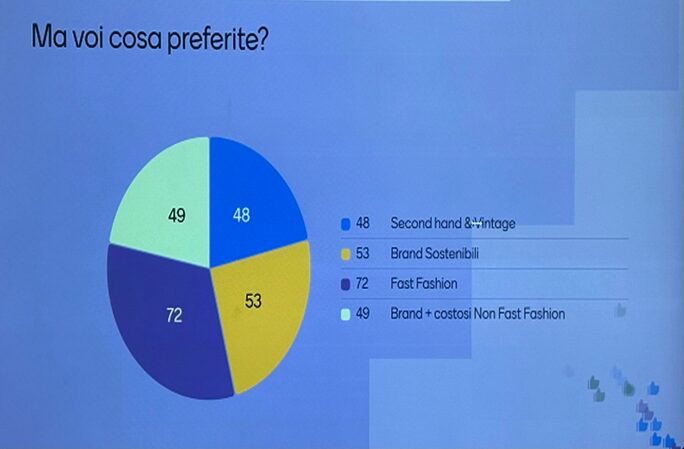
During a survey about the brands we usually buy, it became clear that fast fashion is still very popular, mainly because it is cheap and convenient. This made us ask ourselves an important question: are we really ready to change our habits?
The final quiz on circular fashion was not just a test, but a moment of reflection. Personally, this meeting helped me understand that even small actions can make a difference. Buying less, choosing better quality, reusing and upcycling are simple steps that can lead to more responsible fashion choices. Fashion is not only about trends—it can also be a tool for social and environmental responsibility.